
Artworks
Transtemporal Sight, Spatialized Sound
Recreating tactile objects through digital means to evoke a trans-sensorial nostalgia that seamlessly bridges the analog and the digital.
ARTOEND Editorial Team
25 July 2026
«I wanted to make a visual system where audio could almost press itself into the screen.»
Wyatt Mattoe is a self-taught digital artist working across audio-reactive visuals, generative systems, music production, and experimental code. His practice focuses on mixing nostalgic visual languages with future-facing technology, using distortion, signal, and perception as central materials. He is drawn to images that feel tactile, unstable, and alive: CRT glow, chromatic aberration, early digital graphics, glitch textures, prism-like color separation, and reactive 3D forms.
Alongside visual experimentation, Mattoe produces music and develops self-directed coding projects, often using AI-assisted tools as part of an iterative studio process. His work moves between sound, image, and computation, treating code as a way to sculpt behavior rather than produce fixed visuals. Through generative art and audio-reactive systems, he explores how familiar technologies and memories can be transformed into strange, futuristic sensory objects.
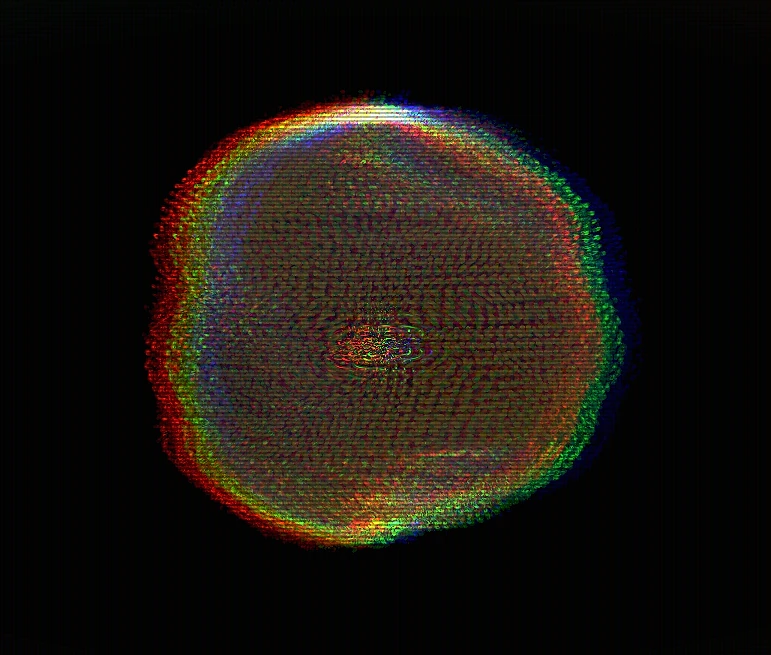
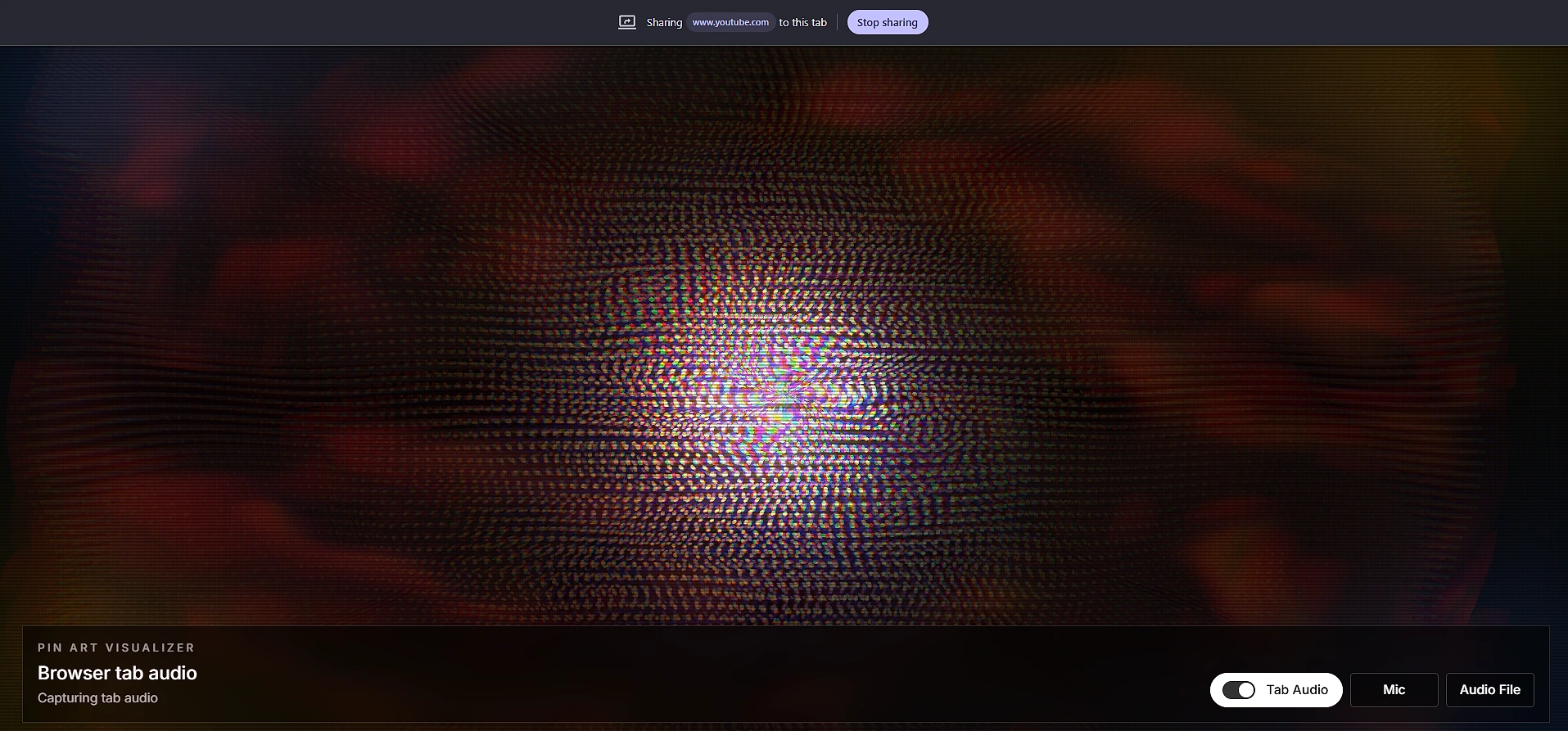
Wyatt: “My intention with this project was to create an audio visualizer that uses reactive pin art as the medium. The first idea came from the 3D pin art toy, the one where you press your hand or face into the pins and it turns pressure into a temporary sculpture. I was interested in that kind of surface because it makes an invisible force visible. Sound works in a similar way. It is physical, but we usually experience it as rhythm, feeling, atmosphere, or memory. I wanted to make a visual system where audio could almost press itself into the screen.
The second major influence was old CRT screens. I grew up around that kind of image language through PS2 games, early internet visuals, glitch aesthetics, and older digital media. The color separation, glow, blur, noise, and chromatic aberration are not just effects to me. They are part of how digital images can feel alive, imperfect, and nostalgic. I wanted the piece to feel like something between an old screen artifact and a futuristic audio sculpture.
The project started as a flat wall of pins. In v1, the main goal was simply getting the pin lattice to exist and react to audio in a satisfying way. In v1.1, I started adding wave and ripple behavior so the surface felt more fluid and organic instead of just mechanically bouncing to the beat. By v2, I wanted to push the idea further, so I wrapped the grid around a sphere and began treating the pins as a parametric field rather than only a wall. That shift changed the piece for me. It became less like a direct reference to the toy and more like a reactive object, a membrane, or a strange digital planet.”
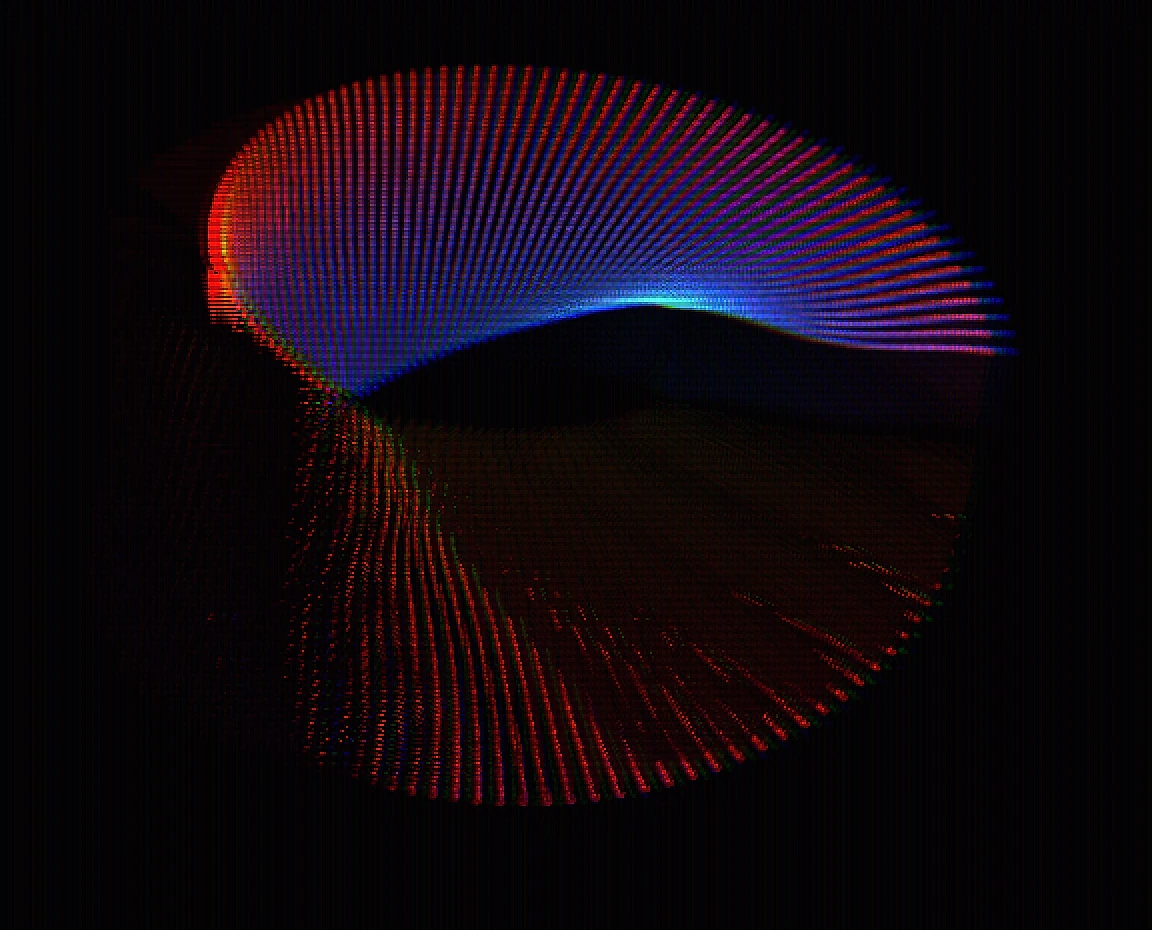
The iterative development of the work is meaningful: the decisions accumulated through looking and asking whether the motion felt right, an evaluative process rooted in sensory judgment rather than technical specification. The work is designed to receive sound from multiple sources — microphone input, uploaded audio files, or live tab audio — meaning that it changes in response to whatever acoustic environment is brought to it. It is, in this sense, a relational object: it has no fixed appearance, only a set of behaviors activated by an encounter with sound. This openness to input connects the work to the theme of the Aestheticizing Weltanschauung as it is understood in this volume. The piece does not represent aesthetic experience from the outside; it instantiates it, requiring the presence of sound — and, by implication, a listener — to become itself.
Continue reading
Unlock this issue to read the full piece.
One purchase unlocks every online section in this issue.
Unlock the issueBack to the issue