

Artworks
Of Conjunction and Disjuncture: Aesthetic Phenomenology
Exploring the anthropological nexus of neuroscience and philosophy through the layered disposition of the noumenal when processed as phenomena.
ARTOEND Editorial Team
25 July 2026
«The intrapersonal architecture of self-criticism, forced belonging, adolescent lostness, and disciplined overreach is not abstract.»
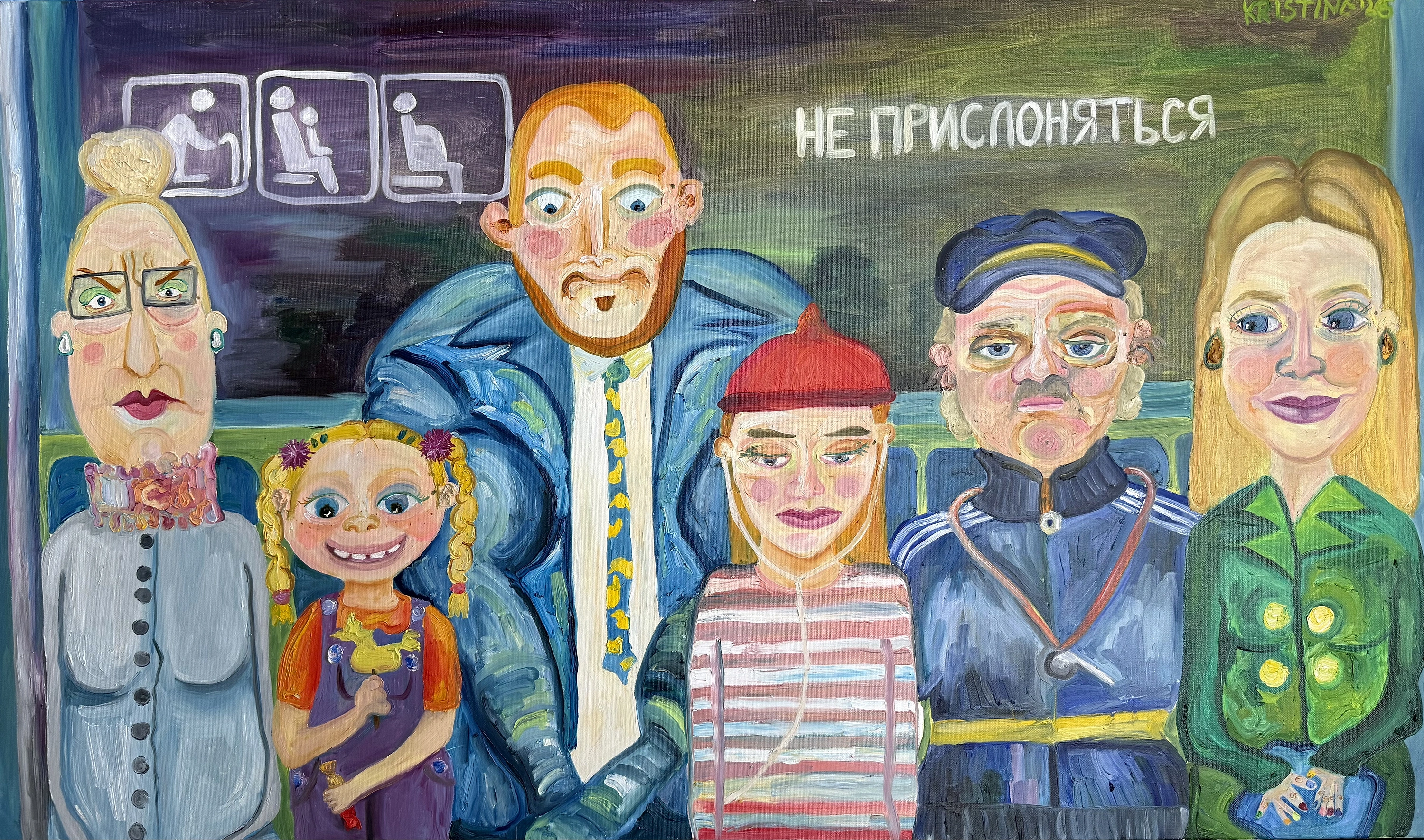
Kristine Stefanija Aleksandrovica is a painter whose work returns persistently to questions that sit at the intersection of neuroscience and contemplative philosophy: the plenitude of variable ways life is lived, and how physiological perception creates phenomenology. She has described attention as generative rather than passive, a conviction deepened by time spent in a Buddhist monastery, and it is that conviction that underpins the logic of this painting.
Kristine: “I was born in Moscow and raised inside a German community, belonging completely to neither. That early experience of living between cultures became a kind of training. I have now spent three years without a fixed home, moving between countries, carrying my belongings and art material across borders and time zones. What I keep returning to is the anthropological texture of it: how differently people inhabit their lives, and what that reveals about the brain’s capacity to construct reality from whatever it is fed.”
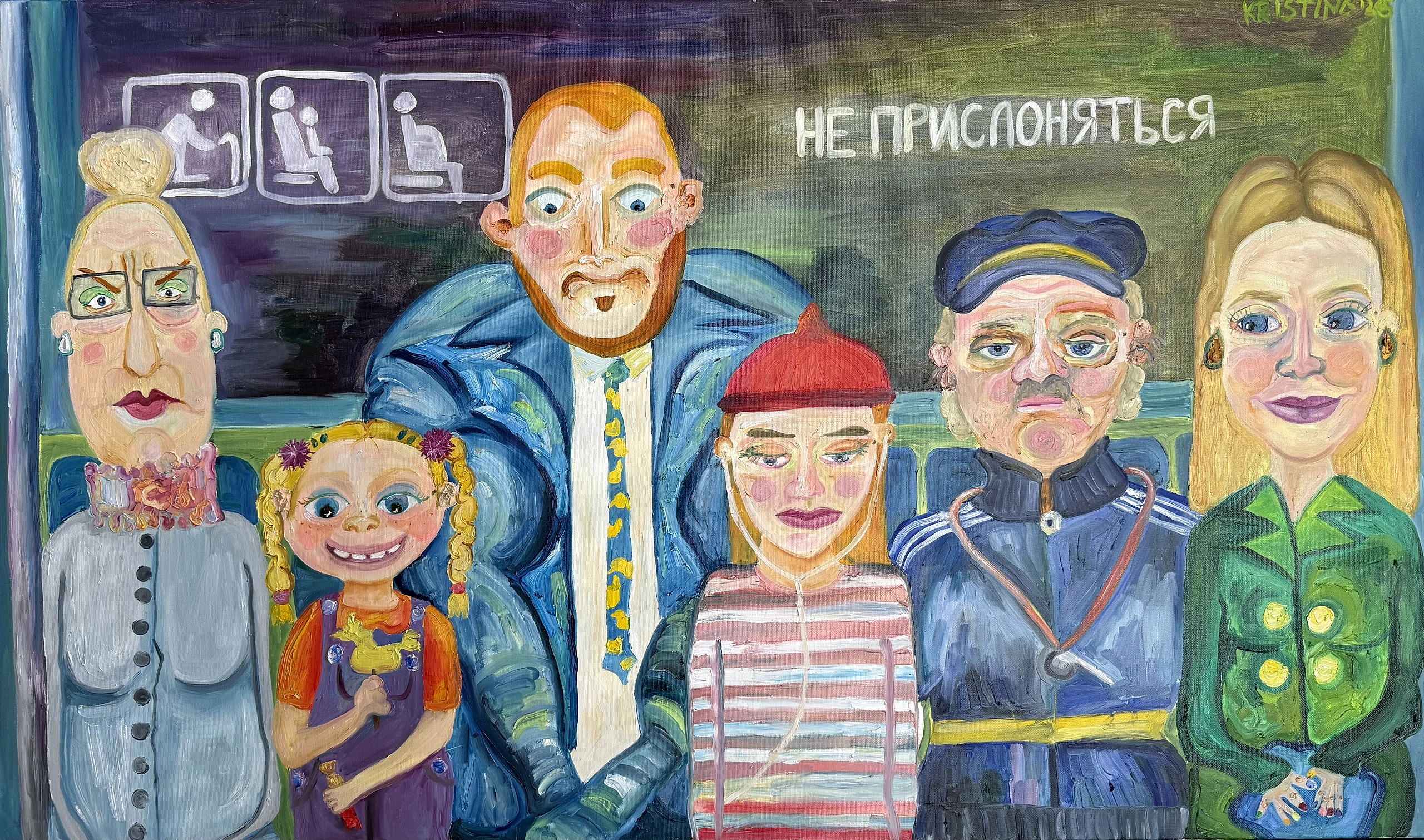
The formal decision that anchors the painting’s argument is in the hands. Only two figures have the woman in green. The other four are present but not grounded — they do not reach, touch, or make. In phenomenological terms, they do not act in the world. It is a precise and restrained way of saying something that might otherwise require many words: that only certain inner states leave a mark on the material plane. Only joy and peace, as Aleksandrovica frames it, are generative.
What binds all six figures to the same origin is a detail that rewards close looking. They share the same hair colour and the same small birthmark on the right temple. The disguises are different, but the source is singular. This is self-portraiture understood not as likeness but as multiplicity: a first-person account of the intrapersonal architecture that shapes experience from within.
Kristine: “Neuroaesthetics is often framed as something observed from the outside, a study of how beauty registers in the brain. But this painting is a first-person account. It is non-inferential knowledge: I did not read about these figures, I saw them all within me. The intrapersonal architecture of self-criticism, forced belonging, adolescent lostness, and disciplined overreach is not abstract. It has a texture, a posture, an expression.”
The enchanted forest beyond the window holds its own significance. It does not change depending on who is looking at it. The sublime is available regardless of which version of the self is sitting in the seat. The painting’s final question is one of permission and agency: who do you let look out the window? Who do you let use their hands? The Weltanschauung toward which the work reaches is not resolution but wholeness — a state that is not the elimination of the difficult figures but the recovery of the conversation between the woman in green and the little girl.
Continue reading
Unlock this issue to read the full piece.
One purchase unlocks every online section in this issue.
Unlock the issueBack to the issue