

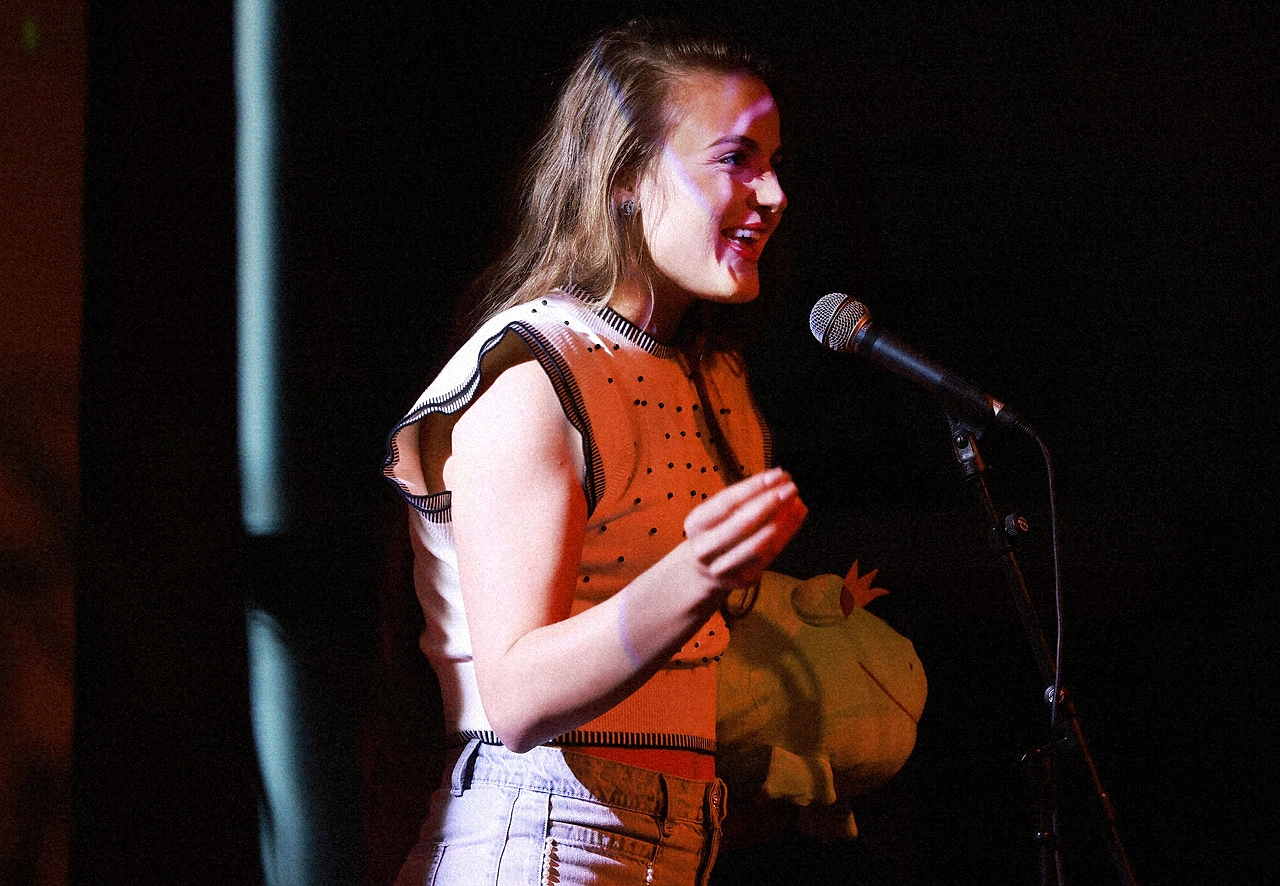
Interview
Ieva Andrulyte: An Art of Neuroscientific Inquiries into the Linguistic
A computational neuroscience researcher embraces the aesthetic as an essential means of organization and communication within the scientific field.
ARTOEND Editorial Team
26 July 2026
«Also, when we look at psychedelic neuroscience, it is very interesting because a lot of people say that with psychedelics, we lose the structure of language and therefore we lose the sense of self. If that is the case, it means that language anchors who we are.»
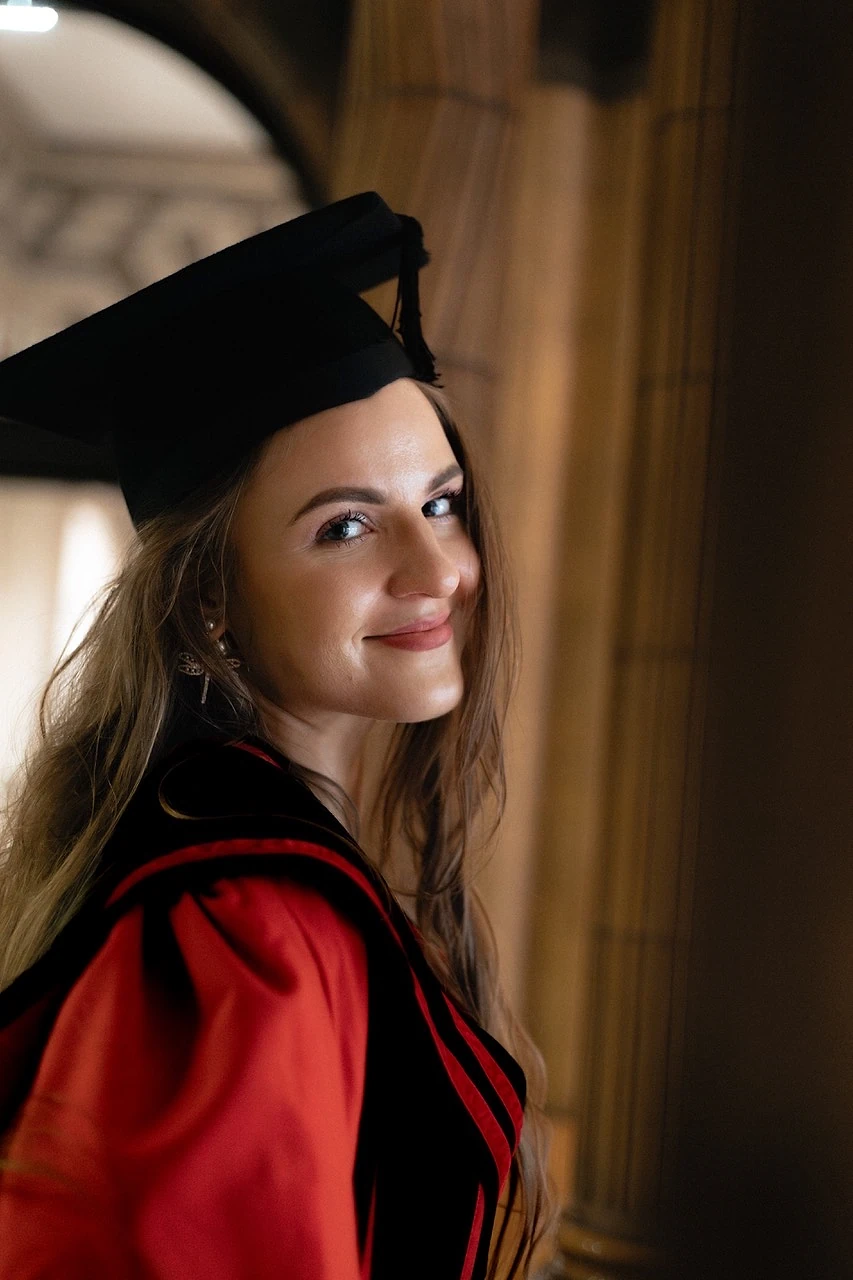
Dr. Ieva Andrulyte is a cognitive and computational neuroscientist and currently holds an honorary research fellow position at the University of Liverpool. Her research investigates the neural mechanisms underlying language lateralisation, combining diffusion MRI tractography, functional MRI, and whole-brain computational approaches to study individual differences in healthy populations. During her PhD, she led large-scale studies using the largest datasets available to date to examine whether hemispheric language dominance can be predicted from white-matter connectivity. She is now developing an independent line of research focused on how altered brain states, including psychedelics, may reshape language lateralisation, and she is currently in the process of securing funding to support this work.
Neuroaesthetics is the bidirectional dialectic between arts and science; whereas scientific praxes of artistic engagement have been present over the past years, the reimagination of science as an aesthetic praxis appears less in the public discourse. Engaging with an instance of which prompted our meeting with Ieva Andrulyte, whose work mainly centers computational neuroscience, focusing on language lateralization and neuroimagery. From what she shares, the researcher started out majoring in molecular biology and genetics; her trajectory moves from biology, system biology, wet lab, to bioinformatics, then neuroimaging, and neuroscience. “So it was, I would say, a little bit different than the conventional pathway.”
An aesthetic of science
Working closely with computational patterns and visualized data, Ieva said that as a scientist, one always has to present their findings in a manner which intrigues and captures attention. She expresses that with the convention of the field being presentation of work through posters, a brain image which attracts people’s eyes must be one which has been intentionally made aesthetic and nice. “A useful way to understand the brain is to think of it as a network. In this network, the grey matter regions act as the nodes, while the white matter tracts act as the edges connecting them. These connections are important because they allow information to travel between different parts of the brain. When we study white matter connectivity, we can use diffusion MRI and tractography to estimate the pathways that these fibres follow. We can then visualise these tracts using different neuroimaging software. For example, we can colour the tracts according to their direction or anatomical location, which helps us see how different brain regions are structurally connected.” The color choices juxtaposition, for her, is a form of art. Further elaborating, she recalls her visit to the University of Bordeaux: “They had loads of art in the department of neuroscience”. For her, it is a form of art, for the structure of each brain is distinctive, which thus allows researchers to be creative in their portrayals of the organ.
ARTOEND: Regarding your research, do you see your scholarly work in life first, or does what you research start appearing in your life after a period of engagement?
Continue reading
Unlock this issue to read the full piece.
One purchase unlocks every online section in this issue.
Unlock the issueBack to the issue